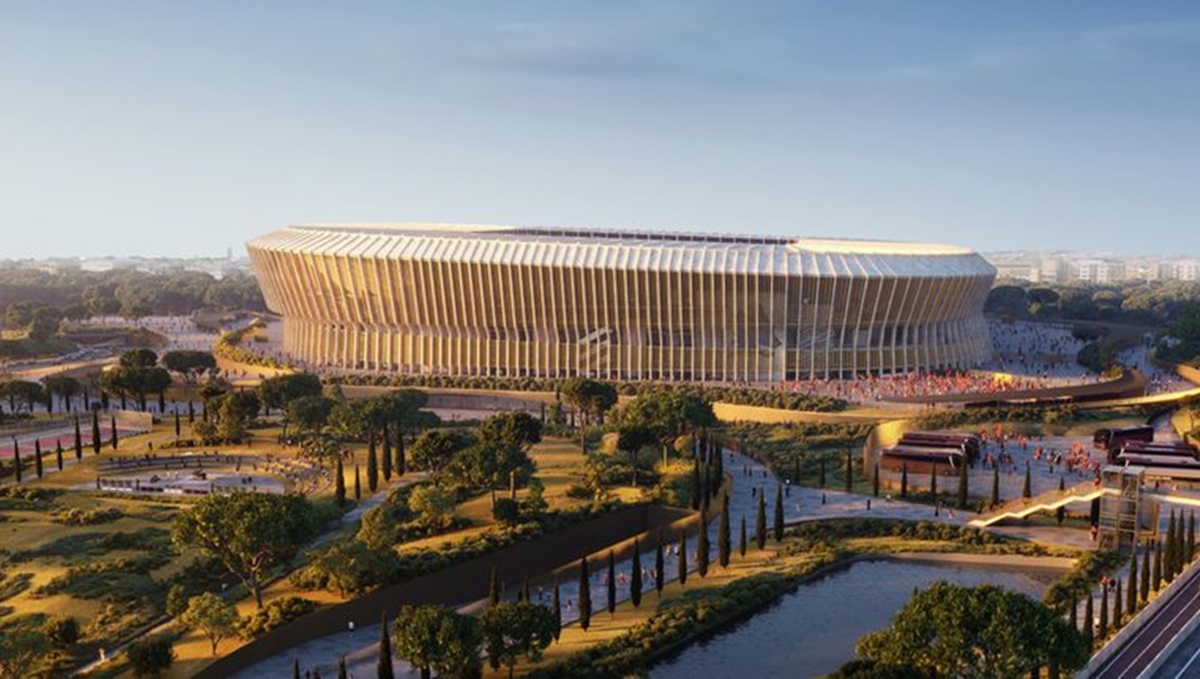
Roma have cleared a historic hurdle in their plan to build a new stadium at Pietralata after winning approval for the definitive project on 28 September. The stadium design is now locked in place: a structure with over 60,000 capacity, two green parks, three pedestrian and cycle paths, car and motorcycle parking, bike facilities, and public transport improvements. No further modifications can be requested, and the blueprint cannot change.
The timing is critical because Roma must meet a UEFA deadline to keep Pietralata in contention as a host venue for Euro 2032. The stadium must be "construction-ready" by March 2027, meaning all planning processes must be complete and work can begin in theory. Recent stadium law reforms and the appointment of extraordinary commissioner Massimo Sessa, president of the Supreme Council for Public Works, have accelerated the process significantly. Roma have already secured the urban planning variant approval, completed the convention text (the future contract between the developer and the council), and concluded expropriations at the normative level. The remaining work centres on preparing the executive project—the final technical drawings specifying every detail down to "the measurements and type of screws needed to fix door handles to changing room doors," as the article explains. Roma's officials expect this to be submitted around the new year, roughly four months from now, though architects and engineers are already working toward an ambitious goal of completing it before Christmas, once final permits come through between July and August.
Once Roma deposit the executive project, Sessa will deploy his special powers to immediately publish the tender for the construction contract. Before the actual procurement begins, a "verification and validation" phase must occur: all offices that issued binding conditions—such as Roma Natura's requirement that 50 per cent of newly planted trees be oaks—must confirm these requirements appear in the final project drawings. The Project Manager will then validate that the work meets all conditions and is ready to begin. These two steps should take only days under commissarial powers. A European tender will then be opened, though it is difficult to predict significant competition for a €1.3 billion project (including VAT) of such complexity; if only Roma enters the bid, the winner will be confirmed within days.
After those preliminary steps, only final acts remain: signing the convention, submitting insurance policies as required by law, and issuing the building permit. Roma must also complete archaeological excavations before construction proper can start.
Story Coverage6 sources on this story
AS Roma has cleared the decisive regulatory hurdle for its new Pietralata stadium. On 28 September, the Services Conference concluded with a unanimous favourable opinion, and Extraordinary Commissioner Massimo Sessa issued the single authorization for construction. The project now moves from the approval phase into the operational phase, with groundbreaking targeted for March 2027. The stadium design is locked in place and cannot be modified further—a critical requirement to keep Pietralata in contention as a host venue for Euro 2032. The facility will hold 60,605 spectators, including approximately 23,000 seats in the South Curve, and encompasses green parks, pedestrian and cycle paths, parking, and public transport improvements.
Roma and the Friedkin Group must now develop a detailed executive project that incorporates all requirements emerging from the Services Conference, including archaeology, environment, traffic and public works provisions. Il Messaggero reports this stage is expected to take three to four months, with Roma's officials aiming to submit the project around the new year, though architects are working toward completion before Christmas. Parallel to design work, the municipal administration will handle project verification, a public concession procedure following public-private partnership rules, and expropriations of private land now possible following the public utility declaration. Il Messaggero describes the subsequent verification and validation phase—where all issuing offices confirm their requirements appear in final drawings—as taking only days under commissarial powers.
Sessa has accelerated processes significantly. Il Messaggero notes that once Roma deposits the executive project, Sessa will immediately publish a European tender for the construction contract, with a €1.3 billion budget (including VAT). The mayor's schedule projects construction taking approximately two and a half years, with potential completion by the end of 2029 or 2031 depending on the outlet. Forza Roma highlights the financial significance: projected stadium revenue of €153 million in 2031—a 245 per cent increase from the €44.4 million currently earned at the Olimpico—could raise Roma's overall revenues by 60 per cent, positioning the club among Europe's elite earners.
AI synthesis of all sources below — always check the originals.
Testo Originale / Source Text
“Concluso un iter - quello approvativo - se ne apre subito un altro, quello per arrivare alle ruspe, alle gru e agli operai in azione. Per il progetto della Roma di realizzare lo stadio a Pietralata ieri è stata una giornata storica: via libera al progetto definitivo. Quindi, di fatto, da ieri non…”
Read the full article in Italian at Il Messaggero – Roma.