← All stories
Roma Receive Final Approval for New Pietralata Stadium Project
·29 September 2026·1h ago

Roma Receive Final Approval for New Pietralata Stadium Project

Source: Cult of Calcio

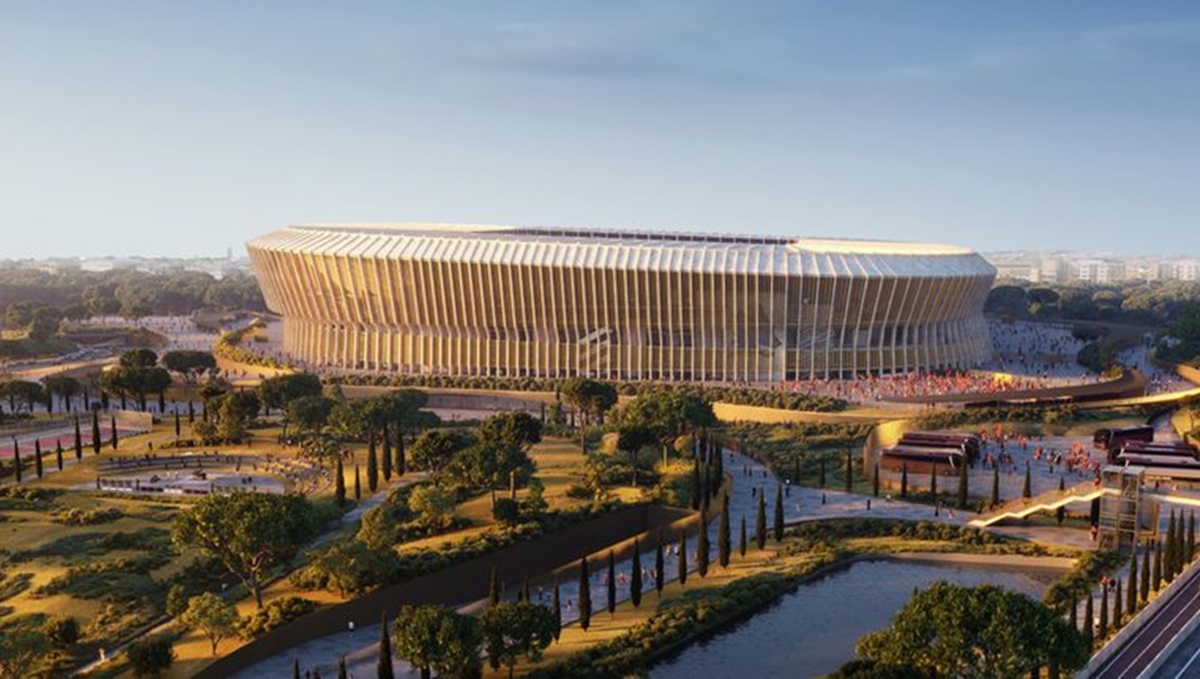
AS Roma have secured definitive authorization to build a new stadium in the Pietralata area following approval by the services' conference on Tuesday at the Ministry of Infrastructure and Transport. The meeting greenlit the final technical adjustments and economic feasibility of the entire plan, clearing the path for the operational phase to commence. Roma will present the executive project shortly and break ground in spring, with construction targeted for completion by 2030 in time for Euro 2032, scheduled to take place in Italy and Turkey. The club will continue playing at the Stadio Olimpico until the new ground is ready.

The new stadium will hold 60,000 seats, with roughly a third dedicated to the new Curva Sud, designed in the style of Borussia Dortmund's Die Gelbe Wand. The project incorporates a substantial new park, a club museum and store. According to QuiFinanza, the stadium itself will cost approximately €600 million, while the entire project is priced at €1.37 billion. The Friedkin Group and its partners will finance the scheme entirely through their own capital, a construction loan, a project bond and a VAT facility.

The final deadline for completion falls roughly one year before Euro 2032 kicks off. The stadium's relocation to a different part of the city carries significant urban planning implications for Rome.

● AI Generated Summary

This summary was generated by an AI model. Always read the source for complete and accurate information.

Story Coverage5 sources on this story

AS Roma have secured final approval to build a new stadium in Rome's Pietralata district, marking what multiple outlets describe as a historic milestone for the club. The Conference of Services concluded its decision-making process on 28 September at the Ministry of Infrastructure and Transport, greenlit the Technical-Economic Feasibility Project and issued a declaration of public utility. The path is now clear for Roma to prepare detailed execution plans, with ground expected to break in spring 2025. Construction aims for completion by 2030, positioning the stadium to host matches during UEFA Euro 2032, scheduled across Italy and Turkey.

The new ground will hold just over 60,000 seats, with roughly a third allocated to a redesigned Curva Sud inspired by Borussia Dortmund's Die Gelbe Wand. The project encompasses two new parks, a club museum and retail spaces, plus improved public transport including new metro and rail access. Il Messaggero details three pedestrian and cycle bridges connecting the stadium to surrounding areas. The overall investment stands at €1.37 billion, according to QuiFinanza, with the stadium structure itself costing approximately €600 million. The Friedkin Group and partners will finance the scheme through their own capital, construction loans, project bonds and VAT facilities. Rome Mayor Gualtieri and Sports Minister Andrea Abodi both praised the approval as transformational for both Roma and the city. Il Messaggero reports that Roma's technical team must submit the detailed execution project by end of January to meet UEFA's March 2027 construction-readiness requirement.

AI synthesis of all sources below — always check the originals.

Testo Originale / Source Text

“Roma have cleared all the hurdles in the administrative process to build a new stadium in the Pietralata area, a process that began years ago. The project has been approved by the services’ conference, which is composed of a mix of local authorities, on Tuesday, La Repubblica reports. The final…”

Read the full article in Italian at Cult of Calcio.

Read original on Cult of Calcio →

More Club News

Roma's new Pietralata stadium: the final steps before groundbreaking in March 2027
Club News● AI
2h ago

Roma's new Pietralata stadium: the final steps before groundbreaking in March 2027

AS Roma's new stadium at Pietralata has cleared its biggest hurdle. The Services Conference concluded positively and the single authorization was signed, closing the main approval phase of the project. The groundbreaking is targeted for March 2027, but several technical and administrative steps remain before construction can begin. Crucially, the dynamic has shifted: the question is no longer whether the stadium will be built, but whether all necessary procedures can be completed to make it a functioning construction site. The first phase involves detailed design. The approved executive project must be further developed to incorporate all requirements that emerged during the Services Conference, including archaeology, environment, traffic and public works provisions. This stage is expected to take three to four months. Parallel verification and validation activities must also proceed ahead of actual construction work. Significantly, much of the process will not rest solely with Roma. A central step is a public tender for the concession—which covers detailed design, construction and management of the facility plus surface rights over municipal areas. This is not a private procurement where the club freely selects a contractor; the procedure must follow public-private partnership rules. Roma, as project promoter, begins from a particular position and may exercise rights provided by regulations within the procedure. The club must complete design work and prepare the construction phase while Rome's municipal administration handles project verification, the public concession procedure and area procedures. These steps can largely run in parallel. Additionally, procedures for expropriating private portions necessary for the project—now possible following the public utility declaration—must be finalized, with costs borne by the concessionaire. Archaeological activities required by the Archaeological Superintendent must also continue. The final phase involves concession award, agreement, guarantees, creation of surface rights and area handover. Only when all these elements are in place can the project become a functioning construction site. The March 2027 target remains realistic but not automatic; meeting it requires Roma and the administration to run all procedures simultaneously without significant delays.

GialloRossi.netRead original →
Roma to honour Alba Audace with third kit for 2027-28 centenary season
Club News● AI
2h ago

Roma to honour Alba Audace with third kit for 2027-28 centenary season

AS Roma are preparing third-kit designs for their centenary campaign, with details emerging of a tribute to Alba Audace, one of three clubs that merged to form the giallorossi. The 2027-28 third kit will feature a white base with dark green details and carry the ASR acronym badge already used in the current season, according to Footyheadlines. Adidas will continue as kit supplier through the centenary year, with the design honouring Alba Audace's heritage without reproducing its original crest. The full presentation remains some way off, but the leaked concept signals a clear intent to mark the approach to 22 July 2027—the club's 100th anniversary—with historical resonance. The kit details offer the first concrete indication of how Roma plan to celebrate the milestone season.

Weekly ratings: Roma fans' affection for Totti, the stadium project, and Di María's timeless left foot
OpinionClub News● AI
2h ago

Weekly ratings: Roma fans' affection for Totti, the stadium project, and Di María's timeless left foot

This week's ratings roundup celebrates the Roma fanbase's enduring bond with Francesco Totti as the club legend approaches his fiftieth birthday. Totti has not simply reached that milestone—his supporters have kept it in play through their unwavering affection, refusing to let the moment pass him by. The city's new stadium project earns the highest architectural praise, described as epochal rather than merely historic, with the piece invoking Dino Viola's pioneering vision as vindication of the long-held dream. Ángel Di María features prominently for his infinite quality and timeless left foot, embodying the passion of his Rosario Central roots. The Argentine's influence proved decisive in a tightly contested Argentina Supercoppa final against Estudiantes, where he took command when the match had turned adversarial. Coach Gian Piero Gasperini's management of squad movements—particularly the potential departures of Nahuel Molina and Paulo Dybala—draws recognition for his paternal firmness. Rather than imposing vetoes, Gasperini demanded maximum intensity in training sessions before players left and upon their return, a form of accountability the Roma players have earned through their pitch performances. The week's wider observations span Italian football's structural challenges. Gigi Cagni's commentary on Italian players and their attitudes, the absence of genuine phenomena alongside widespread affected arrogance, and the loss of academy talent such as Kayode receive critical attention. Germany's national team management under Klopp faces the paradox of overseeing one of the technically weakest squads since the postwar era, while incidents of booing national anthems—both Turkey's conduct towards Italy and Italy's towards Belgium—highlight how incivility transcends borders. A separate note addresses the defacement of Franco Baresi's image, an act of vandalism that damaged a legend's standing while tarnishing only the perpetrator's own reputation.

Feedback