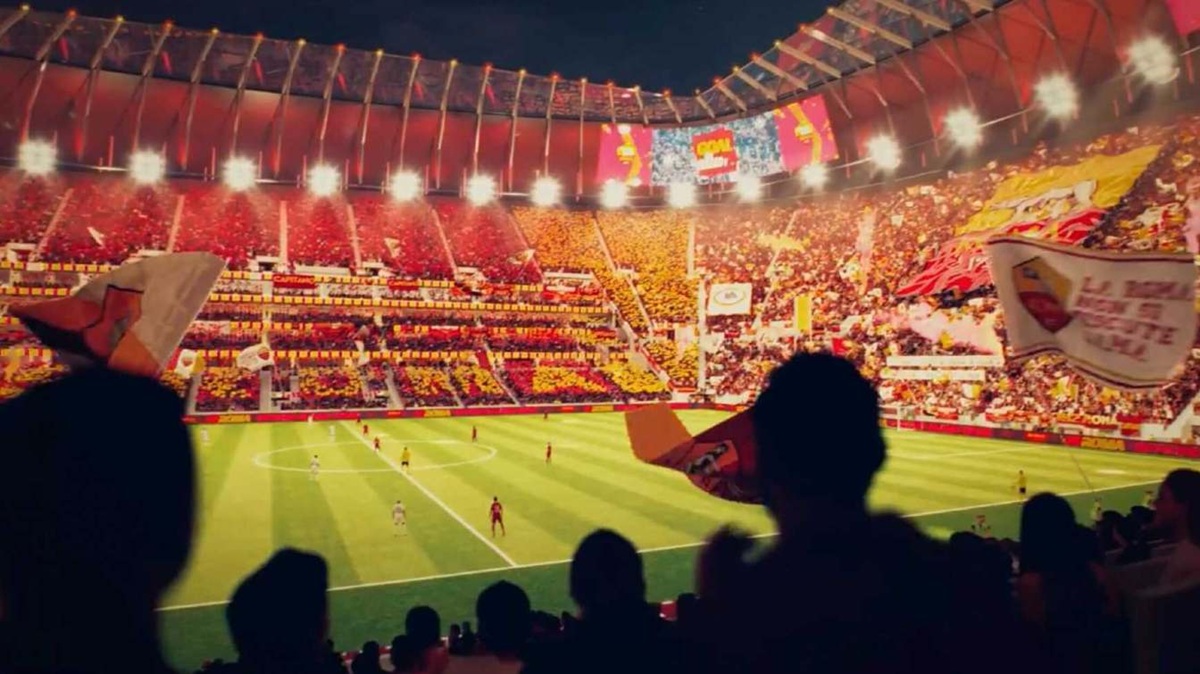
Roma's new stadium at Pietralata is taking increasingly concrete shape, and its Curva Sud will be at the heart of it. Lucia Bernabé, the club's head of institutional relations, announced at the Social Football Summit in Turin that the new curve will be the biggest in Europe. The stadium is designed not only to host matches but to become the new home of Roma supporters.
Bernabé explained that designing a stadium is not only about architecture but about understanding the club's history and the values that hold it together. "When you think about designing a stadium, it is not only about the architectural design of the stadium itself, but about awareness of the club's history and the values that hold it together," she said. "A stadium must not be defined exclusively as a place where a match is played for 90 minutes every week, but is the home of a football team, the home of the fan."
The new Curva Sud, which according to the project could hold around 23,000 spectators, is built on this philosophy. "The study and design of this curve come from the desire to create a sort of embrace for the team: the fan must be able to embrace their club." The project, Bernabé stressed, comes from the vision and determination of the Friedkin family, who have chosen to make an extraordinary investment not only for the future of AS Roma but also for that of the city.
The project is also an opportunity to transform Pietralata. "The first institutions are the citizens themselves. Citizens must understand that we will not damage their area, but improve it. The stadium will bring new roads, infrastructure and will help improve the whole neighbourhood," she said, stressing the importance of constant dialogue between the club, administrations and residents. The aim remains to begin construction in 2027. Bernabé said the project is now at an advanced stage, with the executive design delivered and the final administrative steps still to be completed before work on the sites can begin.
At the same summit, the club's plans for its Centenary in 2027 were also discussed. Michael Gandler, Roma's Chief Business Officer, explained that the club has been working for some time on a programme of initiatives and commercial partnerships to mark the hundred years of history. "For the centenary we started planning two years ago. And this is the ideal moment to start the conversations with clients, with sponsors, to create long and lasting projects. This is the maximum moment, where the doors are most open," Gandler said, stressing the strategic importance of the anniversary for the growth of the Roma brand. He also cited the collaboration with Q8 Radio as an example of the new forms of communication the club has developed. "The world is changing enormously, as are the traditional assets for sponsors. As a club we have launched a platform to create alternative forms of communication," he said, describing the deal as advantageous for the club, the commercial partner and fans.
Marco Caliendo, Roma's Venue Business Director, also spoke about the matchday experience, outlining the club's work to enrich games without losing the identity and atmosphere of the Olimpico. Initiatives he cited included the High Five Tunnel, hospitality experiences and the Business Club, designed to create relationships and professional opportunities even outside matchdays.