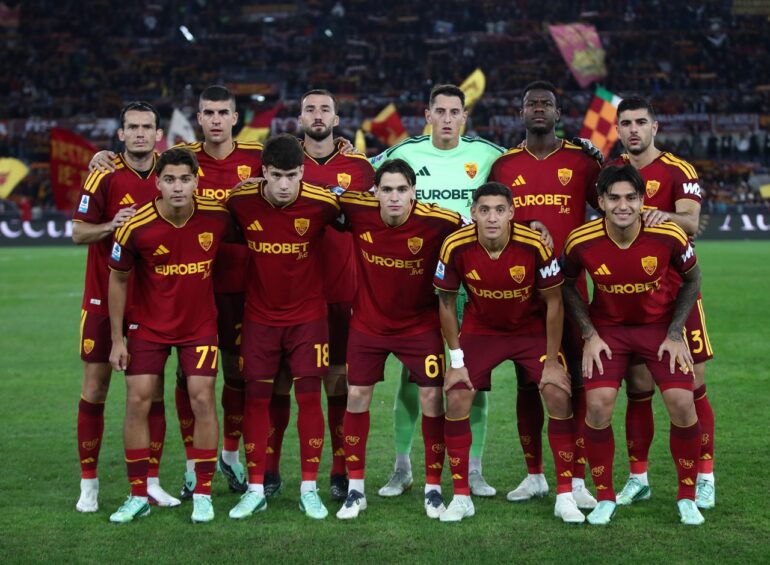

Gasperini's Roma set a new Serie A scoring record, with goals spread across the squad
Roma have scored 28 goals in their first ten Serie A matches of 2026-27, a new club record for the competition that eclipses the 26 scored in the opening ten rounds of 1960/61 and 2016/17. The record came after a 5-0 win away at Udinese, the most recent game, and no Roma side had scored more in that early stretch of a league season. The average is 2.8 goals per match, a pace that, projected over the whole campaign, would mean more than 100 goals. The article stresses that this is a simple mathematical projection, but it shows the scale of the change under Gian Piero Gasperini. The record has come despite a run of closely spaced fixtures and heavy absences, starting with Paulo Dybala and Manu Koné. Donyell Malen remains the most recognisable name in attack, with his ability to run in behind, move constantly and turn harmless-looking balls into chances. However, the article argues that focusing on his goals misses the real secret of this Roma side. Gasperini has built a team in which scoring is no longer the responsibility of the strikers alone. It has become a collective task, open to anyone who can find the right space. The clearest example came in Udine, where five different players scored: Bryan Cristante, Mora, Malen, Evan N'Dicka and Daniele Ghilardi. A midfielder, an attacking midfielder, a striker and two defenders, each scoring in a different way, from close-range finishing and runs into the box to a header and a quick, constructed move. The article notes that this was not an isolated case, as Pisilli, Lulli, Soulé, Koné and Balerdi had also scored in the preceding weeks. Roma score so often, it says, because they get many players into the decisive areas of the pitch. Gasperini underlined the point after the Udinese game: "We are scoring more goals and with more players. This is a great sign." The coach has identified the growing confidence of the group as one of the main reasons for this development. Scoring is not only a matter of technique or systems but also of conviction. When a player starts to believe he can be decisive, the way he attacks the box, looks for a shot and takes responsibility changes. The article also highlights the progress of players who until a few weeks ago looked like simple alternatives. Mora has started to find more consistency in front of goal, Ghilardi is becoming a useful option from set pieces, and Cristante, against Udinese, produced an outstanding performance, combining a goal with an assist. The rotations, the article says, are not weakening the attacking play but multiplying the solutions available to the coach. The article is not blind to the defensive side. Roma have already conceded ten goals in Serie A and, in recent matches, have shown some lapses in concentration that could prove costly against stronger opponents. The definitive step up, it argues, will also depend on the ability to keep balance when the team attacks with many players, an aspect Gasperini knows well and on which he will have to keep working. The piece concludes that the 28 goals in ten matches, a historic record, show a side that finds the net with remarkable ease and a group in which individual talent is enhanced by an increasingly recognisable collective identity. Its closing line suggests that the true record may be building a Roma in which everyone feels capable of scoring.