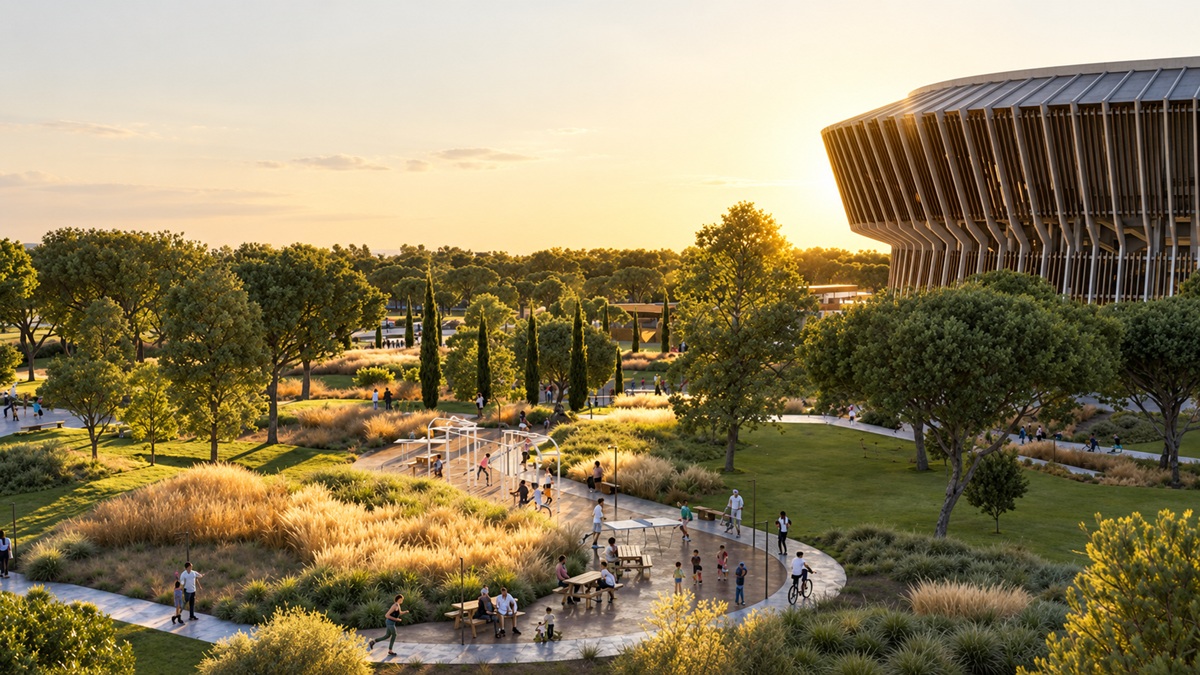
Dan Friedkin is negotiating with UEFA in Copenhagen as Roma awaits a final ruling on its settlement agreement, while a new stadium at Pietralata could become one of Italian football's most significant revenue drivers. According to the club's financial plan, the stadium should generate approximately €154 million in annual revenue by 2031—a transformative figure that reflects the gulf between Roma's current financial constraints and their potential future position.
Roma operates under a UEFA settlement dating to 2022 that requires compliance through the 2026-27 season, with final assessment based on accounts closed in 2024, 2025, and 2026. In June, the club was fined €2 million for exceeding an intermediate target for 2025 and another €4 million for breaching the 70% squad cost rule—a threshold that limits player-related spending (wages, amortisation, and associated costs) to 70% of relevant revenue. This rule explains why increasing revenue is critical. The more a club generates from tickets, sponsorships, advertising, and commercial activity, the greater its margin to sustain an expensive squad without depending on player sales. Pietralata fundamentally shifts this equation.
The financial projections paint a starkly different model. Of the €154 million forecast for 2031, €71.6 million should come from hospitality and €47.8 million from ticket sales—nearly €120 million from public and premium areas alone. Additional revenue streams include €7.8 million from naming rights, €7.8 million from sponsorships, €4.5 million from food and beverage, €4.4 million from non-football events, €3.5 million from museum and tours, €3.1 million from parking, €2.1 million from business events, and approximately €1 million from merchandise. At the Stadio Olimpico, which Roma does not own, matchday revenue reached approximately €55.4 million in 2023-24, but the club cannot monetise all activities a modern owned stadium provides. The advantage lies not simply in increased capacity but in year-round revenue generation.
The club faces a distinction between present and future. The settlement agreement concerns Roma's historical performance; UEFA's assessment through June 2026 cannot be retroactively corrected by Pietralata's future earnings. However, the new stadium enters a separate chapter. The financial plan projects revenue rising from €154 million in 2031 to €156.5 million in 2032, €159.5 million in 2033, and €168.8 million in 2036. The true difference will be between a Roma that must continuously balance the transfer market against financial compliance and one capable of funding sporting strength through recurring infrastructure revenue—allowing the club to move beyond the constant pursuit of player sales necessary to balance its accounts.
Testo Originale / Source Text
“Da una parte Dan Friedkin che a Copenaghen si confronta con Aleksander Ceferin mentre la Roma attende il giudizio finale sul settlement agreement. Dall’altra un nuovo stadio che, secondo il Piano economico-finanziario, nel 2031 dovrebbe generare circa 154 milioni di euro di ricavi. Sono due…”
Read the full article in Italian at GialloRossi.net.