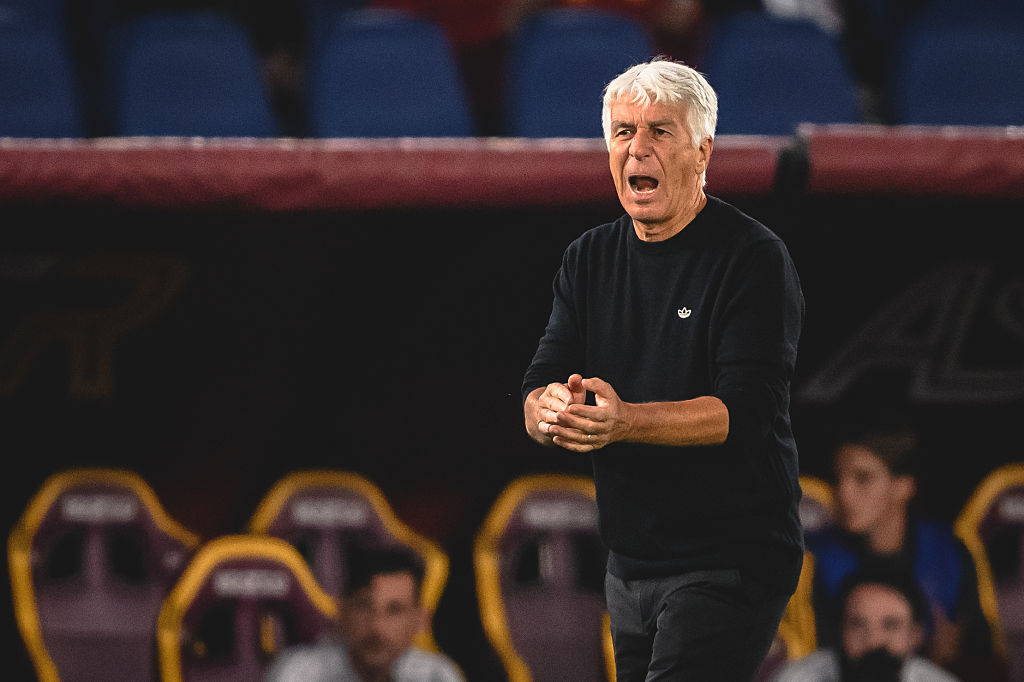
Massimiliano Allegri and Gian Piero Gasperini are set to face each other in Napoli-Roma, a clash the Italian press frames as a duel between two opposing coaching philosophies. Ten principles are laid out to contrast the two men's approaches, with Gasperini's side set against Allegri's in the dugout.
The piece sets out how Gasperini runs his team. He is described as a coach who gives orders from the front: "Comanda uno solo e quello sono io" (only one commands, and that is me). Gasperini is portrayed as a stern, sole decision-maker. The article notes that at Roma he succeeded in bringing down a monument, Claudio Ranieri, the man who had brought him to Trigoria. Ranieri is a former manager of the club and is no longer in charge.
On the training ground, Gasperini demands intensity greater than in matches. Training sessions are played at full tilt with no moment of respite, a modernised version of an old concept. His football is built on aggression: opponents must be hunted, bitten and worn down, and his teams are told to attack "come se foste dei lupi" (as if you were wolves). Build-up play from the back has no place in his system. The ball must always be played forward, and every recovery should be turned into an immediate vertical pass.
Gasperini also makes no distinction based on age or reputation. Young and old players alike are picked on merit: what has been done matters less than what will be done, and age is treated as just a number. The article's ten rules are framed as the "leggi del gol" (laws of goal) that define each coach.
Allegri, by contrast, is presented as a pragmatic, pop-style coach whose mantra is to keep calm, and whose overriding priority is winning, however it is achieved. The article notes his passion for horse racing and the idea of winning by a short head. He is described as a shield for his players, praising them publicly whatever the result and criticising them in private. The piece also quotes Sebastiano Vernazza of La Gazzetta dello Sport, writing: "Se ci avessero insegnato di meno, avremmo imparato di più" (If they had taught us less, we would have learned more), a line tied to Allegri's preference for players who play freely rather than rigid systems.
The article frames the match as a meeting of opposites in the dugout, with the tactical and philosophical contrast between Allegri and Gasperini at the centre of the build-up to Napoli-Roma.
Testo Originale / Source Text
“1.Il calcio è semplice, bisogna passare il pallone al giocatore con la stessa maglia. Allegri lo disse una volta in diretta tv, durante una discussione con opinionisti di visioni opposte. Una provocazione, Allegri sa che il calcio è complicato. Sotto questo aspetto è un allenatore 'pop'.…”
Read the full article in Italian at Forza Roma.