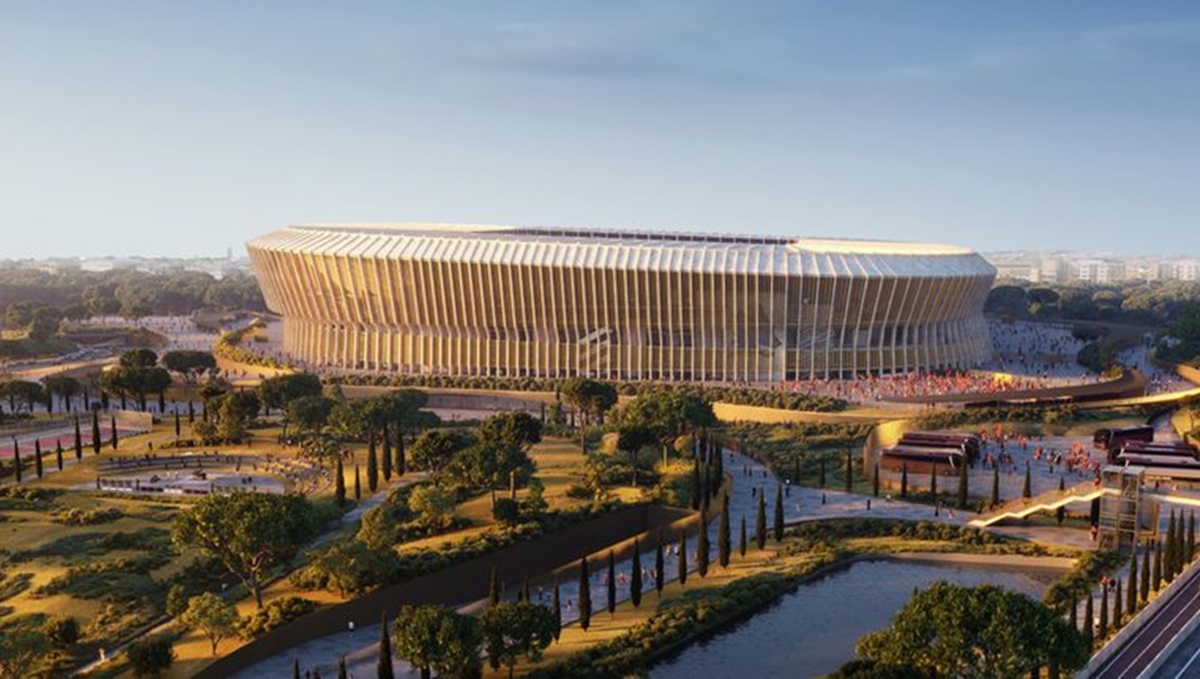
Roma's growth is being driven on two fronts — the sporting rise orchestrated by Gian Piero Gasperini and the construction of a new stadium at Pietralata — that together could transform the club into a genuine European heavyweight. The final approval came through the conclusion of the Conference of Services process, marking far more than a bureaucratic formality. The groundbreaking is scheduled for March 2027, and according to the timetable presented by Rome's mayor Roberto Gualtieri, construction could take approximately two and a half years, allowing completion by December 2029. The stadium will hold 60,605 spectators, including approximately 23,000 seats in the Curva Sud, as part of a broader project worth over one billion euros that encompasses road access, parking, metro connections, green spaces and complementary infrastructure. Gualtieri declared: "At this point Roma's stadium is a certainty and it will be built."
The economic dimension is central to Roma's future trajectory. A stadium owned by the club means direct control of revenue from ticket sales, hospitality, events and commercial activities, without the restrictions of using a rented facility like the Olimpico. According to projections in the project funding documentation, stadium-related revenue could reach €153 million by 2031, compared with €44.4 million generated at the Olimpico — an estimated increase of 245%. These figures could allow the club to increase overall revenue by approximately 60% relative to the latest financial statements.
The Friedkin Group has chosen to build Roma's growth on foundations that extend beyond any single transfer window or season: a competitive squad restored to the highest levels, a return to Europe's primary competition, and an infrastructure capable of guaranteeing top-club revenue streams. The club stated in its official announcement: "It is an achievement that rewards years of work, commitment and collaboration, pursued with determination, vision and continuity by the Friedkin Family. Roma's future will be built through solid and ambitious projects."
Roma's future therefore depends on the convergence of these two drivers: Gasperini consolidating growth on the pitch, and the Pietralata stadium increasing prestige, attractiveness and spending capacity. Remaining stably in European elite requires not just results, but infrastructure, revenue and continuity — the leap in status the club aims to achieve in the years ahead.
Testo Originale / Source Text
“Una crescita che corre su due binari, quello sportivo e quello strutturale, e che può portare la Roma in una dimensione definitivamente diversa. Da una parte il lavoro di Gian Piero Gasperini, il ritorno in Champions League e una squadra che oggi può guardare anche alle zone più alte della…”
Read the full article in Italian at GialloRossi.net.