← All stories
Morocco name El Aynaoui in World Cup squad
·26 May 2026·118d ago

Morocco name El Aynaoui in World Cup squad

Source: Forza Roma

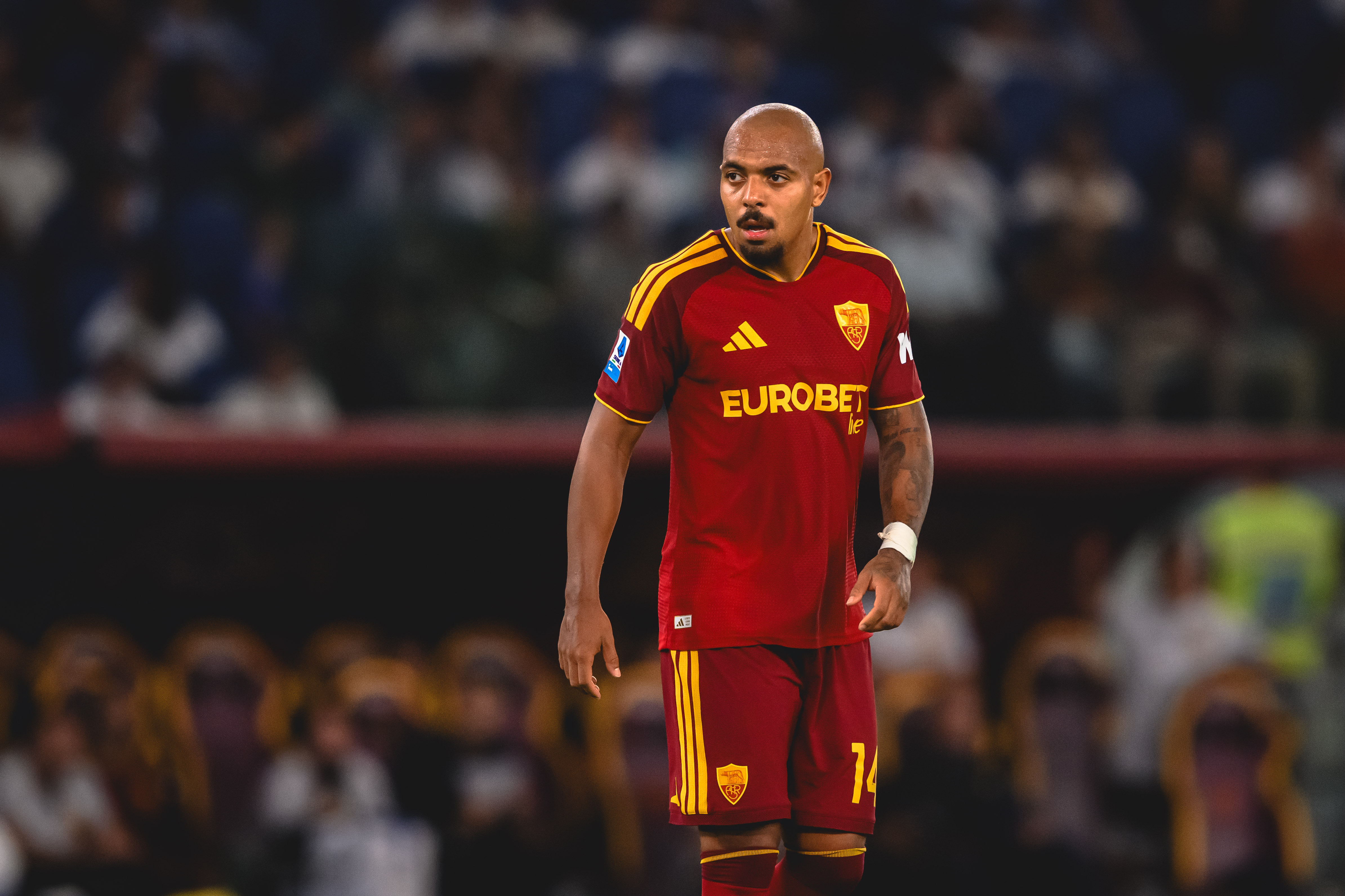
Neil El Aynaoui has been selected by Morocco head coach Ouahbi for the upcoming World Cup, marking his first appearance at the tournament. The Roma midfielder will join his national team as a key figure in midfield, tasked with leading Morocco's challenge against the world's top players.

El Aynaoui's selection comes on the back of Roma's Champions League qualification. At club level, the midfielder has yet to establish himself as a regular starter, but Ouahbi has shown confidence in him by handing him significant responsibility in the national team's midfield. His role as a set-piece specialist and squad leader has made him a cornerstone of Morocco's plans for the World Cup.

El Aynaoui will now focus on international duty as Roma looks ahead to the coming season, which club officials hope will bring him greater prominence and opportunity to fulfil his potential at the Stadio Olimpico.

● AI Generated Summary

This summary was generated by an AI model. Always read the source for complete and accurate information.

Testo Originale / Source Text

Neil, dopo la Champions, si gode anche la convocazione a quelli che saranno per lui i primi Mondiali in assoluto Redazione 26 maggio - 21:03 Da Greenwood a Nusa: caccia ai rinforzi per la Champions League Stagione a luci e ombre. Tante ombre, poche luci. Ma il suo momento arriverà. Intanto El…

Read the full article in Italian at Forza Roma.

Read original on Forza Roma

More Squad News

Cristante, Malen and Wesley decline international call-ups ahead of Roma's October fixture crush
Squad NewsClub News AI
just now

Cristante, Malen and Wesley decline international call-ups ahead of Roma's October fixture crush

Bryan Cristante, Donyell Malen and Wesley have chosen to remain at Trigoria rather than respond to call-ups from Italy, the Netherlands and Brazil respectively during the international break. The decision reflects the unity Gian Piero Gasperini has built at the club, with all three prioritizing recovery and preparation for a demanding stretch between 11 and 31 October, when Roma will play seven matches in 20 days. The move signals a sharp departure from recent history, when tension between the previous medical staff and coaching team had created friction. With the departure of Petrucci and the arrival of Del Vescovo in the medical department, coordination has improved markedly—each decision is now made with the common good and injury prevention in mind. Gasperini has emphasized that daily work serves as a "vaccine" that builds the squad's resilience. On the pitch, Roma have displayed strong athleticism, though some fatigue in the early stages of the second half suggests room for improvement remains. The cohesion at Trigoria reflects what Gasperini describes as a serene and unified atmosphere across squad, technical staff and the completely restructured medical area. This compactness will be tested during the international break, a window the club intends to use for recuperation and consolidation ahead of the congested fixture schedule.

Dybala plays more regularly than he has in a decade, but one thing is still missing
Squad NewsAnalysis AI
1h ago

Dybala plays more regularly than he has in a decade, but one thing is still missing

Paulo Dybala has started all six of Roma's official matches so far this season—five in Serie A and one in the Champions League against Fenerbahce—without being substituted before the hour mark, accumulating nearly 500 minutes. Gian Piero Gasperini had promised: "If he is well, he always plays." For a player whose fitness has been compromised repeatedly in recent years by muscle injuries and two surgical procedures in the last two seasons (one for a tendon injury, the other on his meniscus), this consistency represents a significant shift. The last time Dybala enjoyed a comparable run of consecutive starts was under Claudio Ranieri between November 2024 and January 2025, when he started eleven times in a row. In the first five league matches alone, Dybala played 407 minutes of 450 available—90.4%—a level of continuity at the start of a season he has not achieved for ten years, since 2016–17. Gasperini's tactical approach appears to have uncovered a new dimension to Dybala's game. Against Inter, he covered 9.8 kilometres, outrunning Lautaro Martínez and Donyell Malen, and reached a top speed of 29 km/h—figures that show the coach is demanding far more than just his creative touch. Dybala has provided four official assists already, though the statistics understate his impact: his involvement preceded both of Manu Koné's goals against Inter and Malen's goal in Turin, passes the data does not fully credit. Across his last nine appearances spanning the end of last season and the current campaign, he has delivered eight assists, five of them to Malen, an understanding that is becoming one of Gasperini's principal weapons. The Dybala of a few years ago was primarily a finisher; now he increasingly functions as the team's offensive playmaker, coming deep, opening up space, spotting the striker's movement ahead of others, and accelerating play with a single touch. Gasperini expressed his confidence plainly: "Physically Dybala is a beast. He could often even do extra time." A statement that would have seemed paradoxical not long ago, when managing his physical condition was a recurring theme. What remains absent, however, is the goal. Dybala has not scored since Torino–Roma on 18 January. Eight months have passed on the calendar, though only thirteen appearances have occurred in between because of the meniscus injury and March's surgery. His drought has begun to weigh on a player accustomed throughout his career to making an impact in front of goal. Against Inter he shot four times and, encouragingly, attempted more aggressive finishing options, including a hard strike he has rarely attempted recently—not merely his customary left-footed curl, but renewed confidence in his strike and his body. This moment of returning to goalscoring is probably the final step Gasperini awaits. He has already recovered a Dybala capable of playing with continuity, running, supporting the team, and above all making those around him better. Now what remains is for him to resume doing what came most naturally for years: scoring.

GialloRossi.netRead original →
Roma squad depleted by international duty; twelve called up to national teams
Squad NewsClub News AI
1h ago

Roma squad depleted by international duty; twelve called up to national teams

Twelve Roma players have been called up to their respective national teams during the international break, leaving Trigoria semi-empty: Ghilardi, Mancini, Balerdi, Soulé, Castro, Mora, Pisilli, Lulli, De Marzi, Koné, N'Dicka and Koulierakis will join their countries. Bryan Cristante, Donyell Malen and Wesley will remain in Rome, though their physical problems are not causing concern and they are expected to be available for the return fixture against Como. The extended pause—roughly twenty days of useful preparation—will allow many players to recover and recharge before a demanding run of fixtures begins. Marten de Roon, who arrived at the club in the closing stages of the transfer window, stands to benefit significantly from the break. The midfielder is not yet at full fitness and has yet to start a match under Gasperini, partly due to the coach's reluctance to rotate and partly because he accumulated zero minutes in his first two appearances under Sarri at Bergamo over the summer. De Roon is an established Gasperini player who understands the manager's tactical demands, and he is gradually carving out space in the Roma squad. The upcoming international break will provide crucial recovery time before the club faces an intense fixture schedule after the Como match, when the depth of the full squad will be needed.

More on Neil El Aynaoui

Player profile →
Roma outspent Inter by €25m under Friedkin ownership
AnalysisClub News AI
5d ago

Roma outspent Inter by €25m under Friedkin ownership

Roma and Inter will meet on the pitch this Saturday as the Serie A leaders, but behind the fixture lies a stark contrast in how their respective owners build and sustain their projects. Gian Piero Gasperini's Roma have invested €211 million in player acquisitions since his arrival, while Cristian Chivu's Inter have spent €186 million—a gap of €25 million that illustrates the Friedkin Group's commitment to backing the sporting project despite UEFA financial fair play constraints. By contrast, Inter's ownership under Oaktree has prioritised economic and financial stability. The €211 million Roma figure spans the campaigns that began with Gasperini's appointment. In the 2025–26 season, Roma spent €86.5 million, with Wesley arriving for €25 million and Neil El Aynaoui for €23 million, alongside Robinio Vaz (€20 million), Jan Ziółkowski (€6.5 million), and several expensive loans including Donyell Malen, Bailey, Evan Ferguson, Daniele Ghilardi and Zaragoza. The acceleration came this summer: the Friedkin Group approved €124.5 million for 2026–27, comprising Santiago Castro (€35 million), Rodrigo Mora (€25 million), Malen's permanent transfer (€25 million), Konstantinos Koulierakis (€16.5 million), Nahuel Molina (€13 million), Ghilardi's purchase (€8 million), Marten de Roon (€1 million) and Leonardo Balerdi's loan (€1 million). The Porto agreement for Mora includes a further €25 million for 2027 or 50 per cent of any future sale. The contrast deepens when examining the wider impact on club finances. Since summer 2025, Roma's squad costs—including salaries, depreciation and loan fees—have risen by approximately €15 million, while Inter's have fallen by approximately €10 million. The Friedkin Group has covered losses through fresh capital injections, accepting red accounts to sustain sporting growth; Roma has not closed a profitable financial year since their 2020 arrival, with 2025–26 expected to end in loss. Oaktree delivered a €35 million profit in its first Inter season and is preparing to close the next year in the black. Both approaches remain valid: Chivu inherited a structured squad already competing at the highest level, while Gasperini was tasked with rebuilding after Roma's seven-year absence from the Champions League. Saturday's direct clash will test both strategies on the pitch. One club has chosen acceleration to close the gap; the other is maintaining competitiveness while reducing the squad's economic burden.

GialloRossi.netRead original →
Friedkin's €211m spending outpaces Inter's €186m in two years as Roma and Inter prepare for direct clash
Club NewsAnalysis AI
5d ago

Friedkin's €211m spending outpaces Inter's €186m in two years as Roma and Inter prepare for direct clash

As Roma and Inter prepare to meet this week, the two clubs' transfer philosophies have diverged sharply over the past two years. The Friedkin Group has committed €211m in investment across two seasons under Gian Piero Gasperini, while Inter's owners Oaktree have adopted a more cautious strategy, spending €186m under Cristian Chivu with an emphasis on youth development and financial stability. In Gasperini's first season at Roma (2025-26), the club invested €86.5m across the transfer window and January. Summer arrivals included Wesley (€25m) and El Aynaoui (€23m), followed by Robinio Vaz (€20m) in January and a costly loan deal for Donyell Malen (€2m). The squad was further bolstered by acquisitions and loans involving Ziolkowski, Bailey, Ferguson, Ghilardi and Zaragoza. The current 2026-27 campaign has seen Roma spend €124.5m, with major moves including the permanent purchase of Malen (€25m), Santiago Castro (€35m), Rodrigo Mora (€25m), Konstantinos Koulierakis (€16.5m), Nahuel Molina (€13m) and Marten de Roon (€1m), plus the redemption of Ghilardi (€8m) and the loan of Leonardo Balerdi (€1m). Over two years, these investments have increased the squad's salary and amortisation costs by approximately €15m. Inter's approach under Oaktree reflects cost containment and team development. During Chivu's first season they acquired younger talent including Luis Henrique (€24.5m), Bonny (€23m), Diouf (€20m) and Sucic (€15.5m), plus Akanji on loan (€1m), totalling €84m. The 2026-27 window has seen just €102m committed to signings, bringing cumulative Chivu-era spending to €186m. Unlike Roma, Inter has cut squad costs by approximately €10m over the same period, inheriting a competitive core that required less overhaul.

Roma's €211m spending outpaces Inter's €186m under respective new coaches
Transfer NewsClub News AI
5d ago

Roma's €211m spending outpaces Inter's €186m under respective new coaches

AS Roma have spent €211 million on transfers since Gian Piero Gasperini's arrival in summer 2025, significantly more than Inter's €186 million under Cristian Chivu over the same period. The spending patterns reflect differing philosophies between owner Friedkin, who readily invests in quality acquisitions, and Inter's ownership Oaktree, which has prioritised young prospects and financial stability. Gasperini received immediate backing from Friedkin in summer 2025 with two signings over €20 million each: Wesley for €25 million and Neil El Aynaoui for €23 million. That window also brought Ziolkowski for €6.5 million and loans including Bailey (€3m), Evan Ferguson (€3m), Ghilardi (€2m) and Zaragoza (€2m), totalling €86.5 million. The 2026-27 season saw heavier investment: Donyell Malen's loan made permanent for €25 million, Santiago Castro for €35 million, Rodrigo Mora for €25 million, Konstantinos Koulierakis for €16.5 million, and Nahuel Molina for €13 million. Ghilardi was bought out for €8 million, while Leonardo Balerdi joined on loan for €1 million. Marten de Roon arrived for €1 million, bringing the current season's total to €124.5 million. Inter's approach under Chivu has centred on younger profiles. Summer 2025 signings were Luis Henrique (€24.5 million), Bonny (€23 million), Diouf (€20 million) and Sucie (€15.5 million), plus Akanji on loan (€1 million) — €84 million total. This season added Provedel for €3 million, reaching €102 million. The comparison shows stark strategic differences: Roma's squad cost rose by approximately €15 million through wages, amortisation and loan fees since summer 2025, while Inter's squad cost fell by roughly €10 million over the same span, reflecting their contrasting investment and salary philosophies.

Feedback